


Why is NASA’s Curiosity Rover trending? Mars sulfur mystery deepens
The NASA Curiosity Rover is trending due to renewed interest in its 2024 discovery of pure elemental sulfur on Mars—the first of its kind. Two new studies published in 2026 shed light on how this unexpected deposit formed, suggesting ancient volcanic gases or icy traps may be responsible, rewriting Mars' geological history.
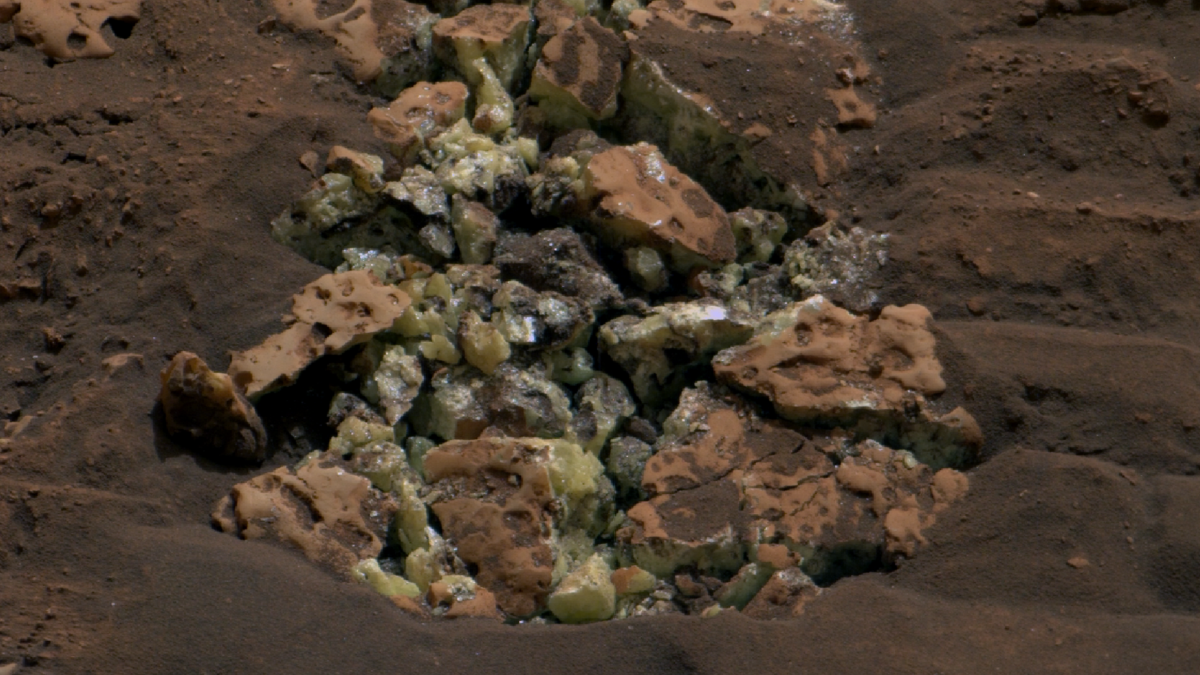
What happened
- 2024
Curiosity Rover accidentally cracks open a rock in Mars' Gale Crater, revealing puzzling pure yellow sulfur crystals. [1][2]
- June 2026
A study in Science analyzes the sulfur deposit, confirming its unprecedented purity and vast 2,100-square-meter spread across Gediz Vallis. [1]
What you need to know
This is the first detection of pure elemental sulfur on Mars—prior findings were sulfates (sulfur-oxygen compounds). [1][2]
The sulfur's fragile rock form suggests it likely formed in its current location, possibly from ancient volcanic gases trapped beneath ice. [1]
Its discovery challenges existing models of Mars' water history and geological processes. [1]
Scientists are still debating whether volcanic activity, subsurface chemical reactions, or evaporating water caused the sulfur to crystallize in this specific region.
Background
Mars' surface is rich in sulfates (sulfur-oxygen minerals), often linked to ancient water evaporation. Pure sulfur was never observed before 2024.
The 2024 find occurred when Curiosity's wheel broke a rock, exposing startlingly bright yellow crystals. Subsequent analysis showed 100% sulfur composition.
Researchers propose the sulfur may have formed from gases cooling inside ice 'clathrates' (cage-like structures) or through low-temperature chemical reactions.
Questions people ask
Why is pure sulfur on Mars surprising?
Sulfates (sulfur-oxygen salts) are common on Mars, but pure sulfur requires unique conditions—like volcanic gases or water evaporation without other minerals—never before seen. [1][2]
What does this discovery mean for Mars' history?
It suggests Mars had complex chemical processes, possibly involving water and volcanic activity, that current models don't fully explain. [1][2]
Could this impact the search for life on Mars?
While not direct evidence of life, understanding Mars' chemical history helps identify potential habitable environments, making it relevant to astrobiology. [2]
Where this came from
[1] sciencealert.com
NASA's Curiosity Rover Burst Open a Rock on Mars And Found a Big Surprise
Preview image from sciencealert.com
 [2] m.economictimes.com
NASA Curiosity Gediz Vallis discovery: What do the yellow crystals found by Curiosity on Mars tell us abou (economictimes.com)
Preview image from m.economictimes.com
Found through Google Trends and drafted with AI from at least two cited sources. Published automatically after passing our automated checks for sources, wording and safety. It may not have been reviewed by a person yet. Report a correction.