


When does Daylight Saving Time end in 2026?
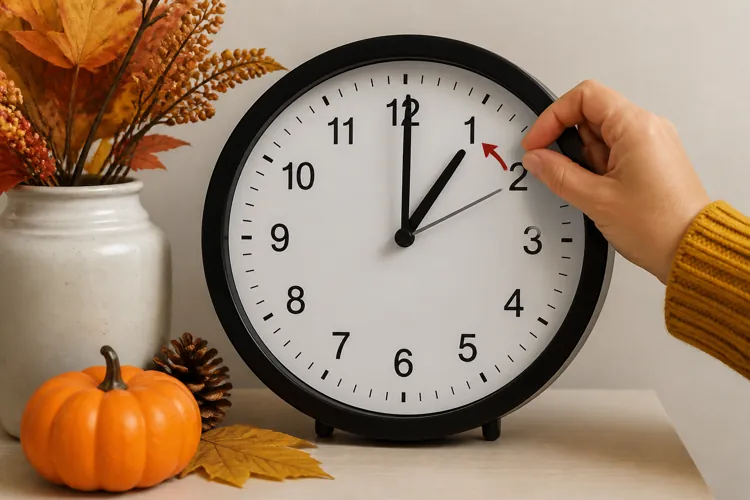
People are searching for clock change dates as the end of Daylight Saving Time approaches. Clocks will be set back one hour on November 1, 2026, to return to standard time.

What happened
- Sept 1
Meteorological fall begins [1].
- Sept 22
The fall equinox marks the start of astronomical fall [1].
- Nov 1, 02:00 UTC
Daylight Saving Time ends and clocks move back one hour [1], [2].
- March 14, 2027, 02:00 UTC
Clocks will move forward one hour to restart DST [1].
What you need to know
Digital devices like tablets and smartphones usually update automatically [1].
Manual updates are often required for car clocks, analog clocks, and some home appliances [1].
Ending DST results in gaining one hour of sleep [1].
Experts suggest morning sunlight and consistent schedules to ease the transition [2].
It is not confirmed if Congress will pass legislation to end seasonal clock changes.
Background
Daylight Saving Time shifts daylight to be an hour later in the morning and longer in the evening to align with active hours and save energy [1].
Some medical experts and coalitions are lobbying for permanent standard time, arguing it better fits human sleep-wake cycles than permanent daylight saving time [2].
Two different bills are being considered in Congress: the Sunshine Protection Act for permanent daylight saving time and the Sunshine for Our Kids Act for permanent standard time [2].
Questions people ask
What is the correct name for the time change?
The correct term is Daylight Saving Time, without an 's' on saving [1].
Why do some experts prefer permanent standard time?
They believe brighter mornings help people stay alert and maintain healthier sleep patterns compared to the dark winter mornings of permanent DST [2].
Where this came from
Found through Google Trends and drafted with AI from at least two cited sources. Published automatically after passing our automated checks for sources, wording and safety. It may not have been reviewed by a person yet. Report a correction.