

Why are Treasury bills trending in Singapore?
Treasury bills are trending in Singapore because their yields have decreased, prompting comparisons with other cash parking options like fixed deposits and savings accounts.

What happened
- 4 Nov 2026
The yield on the 6-month Singapore T-bill dipped to 1.86% in an auction [2].
- Earlier
The NEOS Enhanced Income 1-3 Month T-Bill ETF (CSHI) was introduced to enhance income potential beyond traditional T-bills [1].
What you need to know
Treasury bills offer lower risk and liquidity compared to other options.
The yield on Singapore T-bills has decreased recently.
Comparisons are being made with other cash parking options like fixed deposits and savings accounts.
The NEOS ETF aims to enhance income potential while maintaining a low risk profile.
The exact reasons behind the yield decrease in Singapore T-bills are not specified in the sources.
Background
Treasury bills are short-term debt securities issued by the U.S. government, offering lower risk and liquidity. The NEOS Enhanced Income 1-3 Month T-Bill ETF (CSHI) aims to build on this foundation by enhancing income potential through a data-driven options strategy.
In Singapore, the yield on the 6-month T-bill has recently decreased to 1.86%, prompting comparisons with other cash parking options like fixed deposits and savings accounts. The latest Singapore Savings Bond (SSB) offers a 10-year average return of 2.39%, which is slightly lower than the previous issue.
Questions people ask
What is the current yield on Singapore T-bills?
The yield on the 6-month Singapore T-bill is currently 1.86% [2].
What is the NEOS Enhanced Income 1-3 Month T-Bill ETF?
The NEOS Enhanced Income 1-3 Month T-Bill ETF (CSHI) aims to enhance income potential beyond traditional T-bills by using a data-driven options strategy [1].
What are the comparisons being made with other cash parking options?
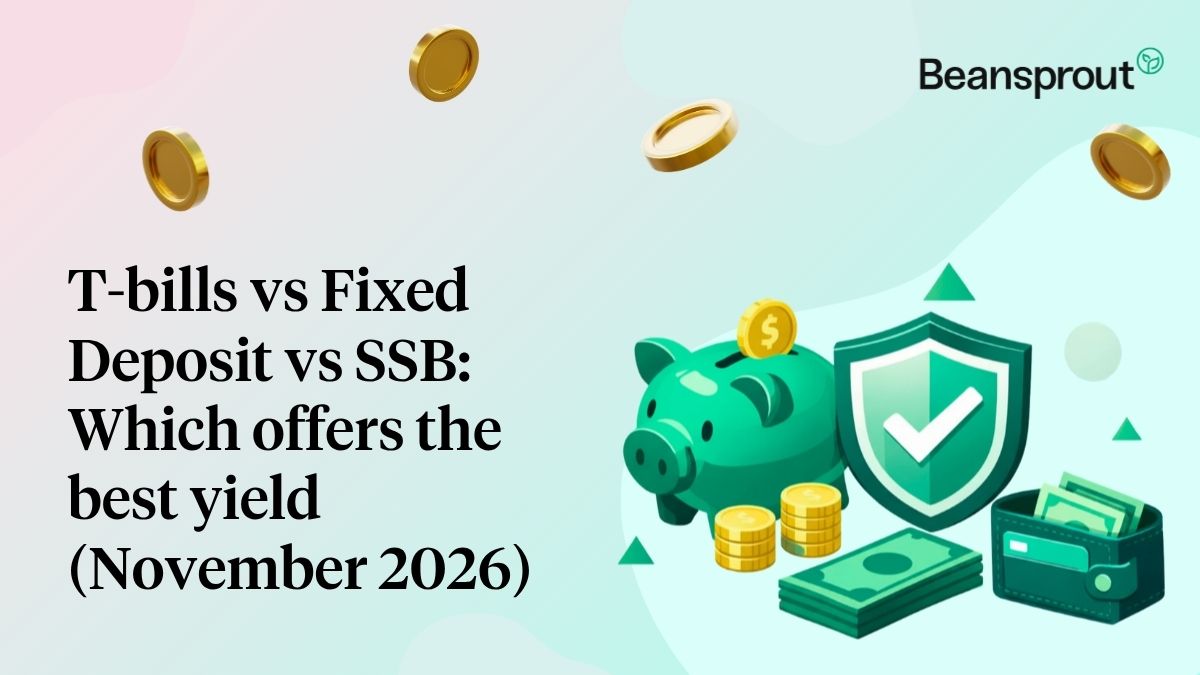
Comparisons are being made between T-bills, fixed deposits, and savings accounts in terms of yield and accessibility [2].
Where this came from
Found through Google Trends and drafted with AI from at least two cited sources. Published automatically after passing our automated checks for sources, wording and safety. It may not have been reviewed by a person yet. Report a correction.