


Why is the Singapore Grand Prix trending today?
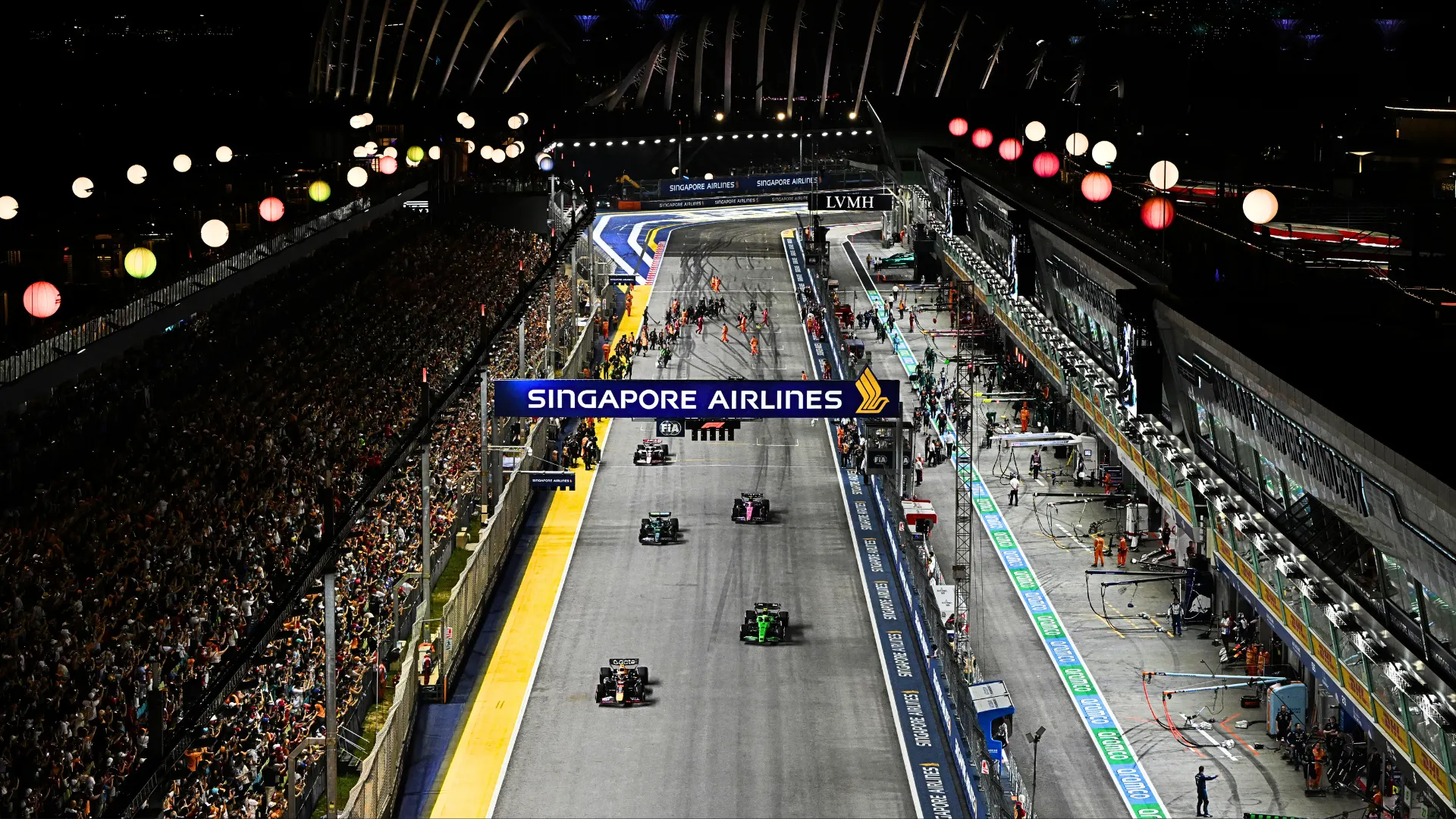
The 2026 Singapore Grand Prix has been declared a heat‑hazard race and is being run amid air‑quality concerns from regional fires. Drivers and teams are weighing cooling‑vest systems while officials monitor the haze, prompting public interest.
What happened
- Earlier
F1 announced the Singapore round as a heat‑hazard event, allowing cooling kits for drivers and noting nearby smog from Indonesian fires [2]
- 9 Oct, 06:30 UTC
Practice and Sprint Qualifying begin on the night‑lit Marina Bay circuit, with teams preparing for high temperatures and possible grip changes from intermittent rain [1]
- 10 Oct, 12:00 UTC
Sprint race and Grand Prix qualifying take place, testing driver stamina under 30‑35 °C track temps and reduced visibility from haze [1][2]
- 11 Oct, 14:00 UTC
Main Grand Prix scheduled; drivers may use cooling vests, but some teams (e.g., Mercedes) opt out, citing performance trade‑offs [2]
What you need to know
Heat‑hazard status permits cooling‑vest systems that pump chilled liquid to the driver.
If a team skips the cooling kit, it must add 5 kg of ballast to keep performance balanced.
Air‑quality monitoring is ongoing, but officials have not declared the haze a safety issue.
Singapore’s night race still sees track temperatures of 30‑35 °C, affecting tyre wear and grip.
Whether the haze will intensify enough to force a race delay or additional safety measures remains unconfirmed.
Background
The Singapore Grand Prix is the 17th round of the 2026 Formula 1 season, held on the Marina Bay street circuit with 19 corners after recent layout changes. The race runs at night, with track temperatures between 30 °C and 35 °C, demanding high driver concentration and careful tyre management [1].
Since 2025, F1 uses a heat‑hazard designation when forecast temperatures exceed 31 °C. This allows teams to fit cooling devices that circulate chilled liquid through a vest worn by the driver. The system is optional but carries a 5 kg ballast penalty if not used [2].
Regional fires in Indonesia have created smog that reduces air quality in Singapore. F1 is monitoring the situation, as it did at the Bahrain Grand Prix, but has not labeled it a major safety concern yet [2].
Questions people ask
What is a heat‑hazard race?
It is an official status applied when temperatures are expected to exceed 31 °C, allowing teams to install cooling kits for drivers.
Will the smog affect the race?
Officials are monitoring the haze but have not indicated it will impact race operations at this stage.
Why is Singapore considered a tough venue?
The street circuit’s tight layout, high humidity, night‑time heat, and limited overtaking make it physically demanding for drivers.
Where this came from
[1] formula1.com
Facts, stats and trivia ahead of the 2026 Singapore GP
Preview image from formula1.com
 [2] bbc.com
F1 heat hazard declared for fourth time this season
Preview image from bbc.com
[2] bbc.com
F1 heat hazard declared for fourth time this season
Preview image from bbc.com
 [3] skysports.com
Singapore GP: Why Sprint debut at Marina Bay street track provides new twist to F1's toughest race weekend
Preview image from skysports.com
[3] skysports.com
Singapore GP: Why Sprint debut at Marina Bay street track provides new twist to F1's toughest race weekend
Preview image from skysports.com
Found through Google Trends and drafted with AI from at least two cited sources. Published automatically after passing our automated checks for sources, wording and safety. It may not have been reviewed by a person yet. Report a correction.