


Irish government and unions begin public sector pay talks
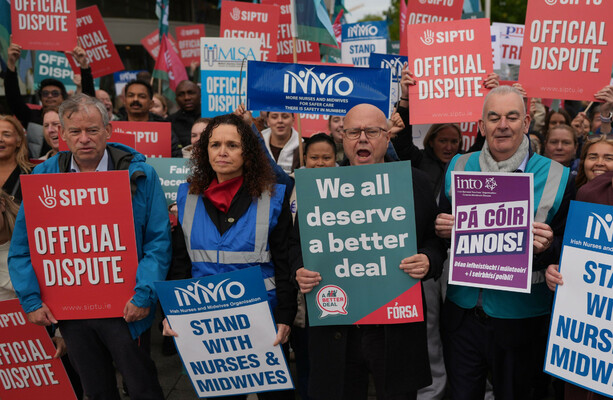
The government and trade unions are meeting to establish a basis for formal pay negotiations at the Workplace Relations Commission. This follows a massive strike by over 300,000 workers and a subsequent agreement by unions to pause further planned industrial action [1].
What happened
- Wednesday
More than 300,000 public sector employees participated in the biggest strike in 17 years [1].
- Friday
Unions affiliated with the ICTU Public Services Committee agreed to suspend a second strike day [1].
- 17 Oct, 2026
Discussions to set a framework for formal pay negotiations are expected to begin [1].
What you need to know
The process is led by WRC chair Kevin Foley, along with Owen Reidy of the ICTU and Oonagh Buckley of the Department of Environment, Climate and Communications [1].
Workers cited the high cost of living, food inflation, and housing difficulties as primary reasons for the unrest [1], [2].
The government previously allocated €1.2 billion for public pay raises in the 2027 budget, but unions viewed this as insufficient [2].
It is not yet confirmed if the current discussions will lead to a final agreement or what the specific terms of a new pay deal will be [1].
Background
The current dispute follows a period of 'defensive' negotiations between 2010 and 2020 after the banking crisis [2]. Unions have expressed frustration that government officials continued to treat pay talks as if the state were still broke long after the economy recovered [2].
The recent strike saw participation from a new generation of workers who highlighted the struggle to afford childcare and homes despite national economic growth [2].
Questions people ask
Why did the workers strike?
Employees stated that the cost of living has pushed them to their limits, specifically citing food inflation and housing costs [1], [2].
Who is leading the current talks?
The effort is led by the chairperson of the WRC, the general secretary of the ICTU, and the secretary general of the Department of Environment, Climate and Communications [1].
Where this came from

Found through Google Trends and drafted with AI from at least two cited sources. Published automatically after passing our automated checks for sources, wording and safety. It may not have been reviewed by a person yet. Report a correction.