


Why is Francis Halzen winning the Nobel Prize in Physics trending?
The Nobel Committee awarded the 2026 Physics prize to Francis Halzen for his leadership in building IceCube, which detects high‑energy neutrinos from cosmic sources. The award highlights the growing public fascination with neutrino astronomy and the role of large‑scale international collaborations.

What happened
- 8 Oct, 09:30 UTC
The Royal Swedish Academy announced Francis Halzen as the sole 2026 Nobel laureate in Physics for his contributions to IceCube and high‑energy neutrino discovery [2][3]
- Earlier
IceCube, a cubic‑kilometre detector embedded in Antarctic ice, began operation in 2011 and has since identified astrophysical neutrinos, opening a new window on the universe [1][3]
What you need to know
IceCube uses thousands of light sensors buried up to 2.5 km in South‑Pole ice to capture flashes from neutrino interactions.
Neutrinos are nearly massless particles that travel unimpeded from cosmic accelerators such as black holes.
The observatory is run by an international collaboration of over 400 scientists from 14 countries.
The discovery of astrophysical neutrinos in 2013 marked the start of multi‑messenger astrophysics.
How the Nobel Committee will address the broader collaboration in future awards remains unclear, as the prize was given to a single individual despite the project's collective nature.
Background
Francis Halzen, a professor at the University of Wisconsin–Madison, conceived and led the IceCube Neutrino Observatory, funded by the U.S. National Science Foundation. The detector’s unique design—embedding sensors in a cubic kilometre of Antarctic ice—allows it to capture rare neutrino events from distant cosmic sources.
Since its first detection of high‑energy neutrinos from outside the solar system in 2013, IceCube has identified neutrinos linked to supermassive black holes and other extreme astrophysical phenomena, providing direct clues about the origins of cosmic rays.
The Nobel Prize statutes limit awards to three individuals, which has led to criticism when large collaborations are recognized through a single laureate, as noted in commentary about the prize’s traditional approach to scientific credit.
Questions people ask
What did Francis Halzen win the Nobel Prize for?
For his leadership in creating the IceCube Neutrino Observatory and the discovery of high‑energy astrophysical neutrinos.
How does IceCube detect neutrinos?
Neutrinos interacting with ice produce brief flashes of light that are recorded by thousands of sensors, allowing reconstruction of the particle’s energy and direction.
Why is the award controversial?
Because the prize was given to a single scientist despite IceCube’s success relying on a large, multinational collaboration, highlighting limits of Nobel rules.
Where this came from
[1] thehindu.com
Eyes on ice: On the Nobel Prize for physics
Preview image from thehindu.com
[2] newsonair.gov.in
Belgian-born scientist Francis Halzen wins Nobel Prize in Physics for neutrino research
 [3] news.wisc.edu
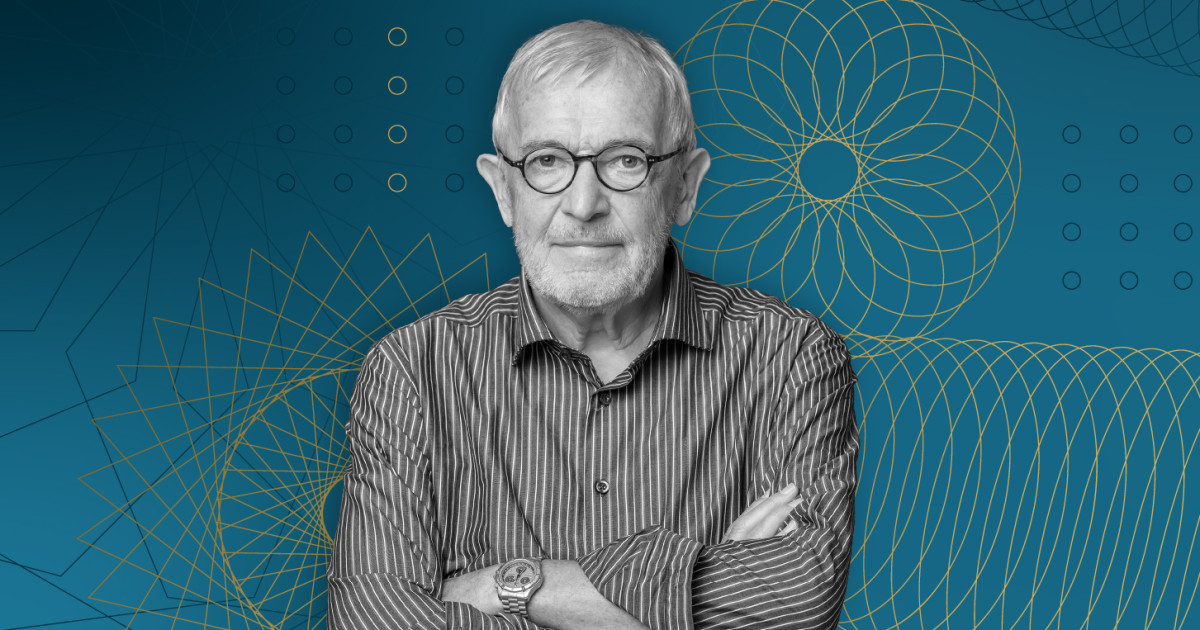
University of Wisconsin–Madison Professor Francis Halzen named 2026 Nobel laureate in physics
Preview image from news.wisc.edu
[3] news.wisc.edu
University of Wisconsin–Madison Professor Francis Halzen named 2026 Nobel laureate in physics
Preview image from news.wisc.edu
Found through Google Trends and drafted with AI from at least two cited sources. Published automatically after passing our automated checks for sources, wording and safety. It may not have been reviewed by a person yet. Report a correction.